Global connectivity is expanding, but optical purchasing is becoming less straightforward. The ITU’s Facts and Figures 2024 report estimates that 5.5 billion people were online, representing 68% of the world’s population. That growth increases pressure on data centers, telecom networks, cloud platforms, and industrial sites. Each environment demands different reach, wavelength, speed, connector design, and operating temperature. A single mode transceiver can support long-distance transmission, yet its value depends on the complete network design.
This guide examines ten practical types of single mode transceiver used by global buyers. The range includes 1G, 10G, 25G, 40G, 100G, 200G, and 400G solutions, alongside CWDM, DWDM, BiDi, and extended-reach formats. The Ethernet Alliance’s 2024 roadmap highlights continuing progress toward higher Ethernet speeds and stronger network efficiency. Meanwhile, LightCounting’s optical communications market research links AI infrastructure and cloud expansion with sustained demand for advanced optical modules. These reports indicate direction, not a universal purchasing answer.
Small details matter. A 10-kilometer module may fail when a route needs 20 kilometers. A wrong wavelength can disrupt an otherwise suitable link. Temperature, fiber quality, coding support, and switch compatibility also deserve careful checks. This is not a perfect ranking. It is a working framework for comparing specifications, supplier reliability, standards compliance, and total operating cost. Buyers should verify current product documentation before placing international orders.
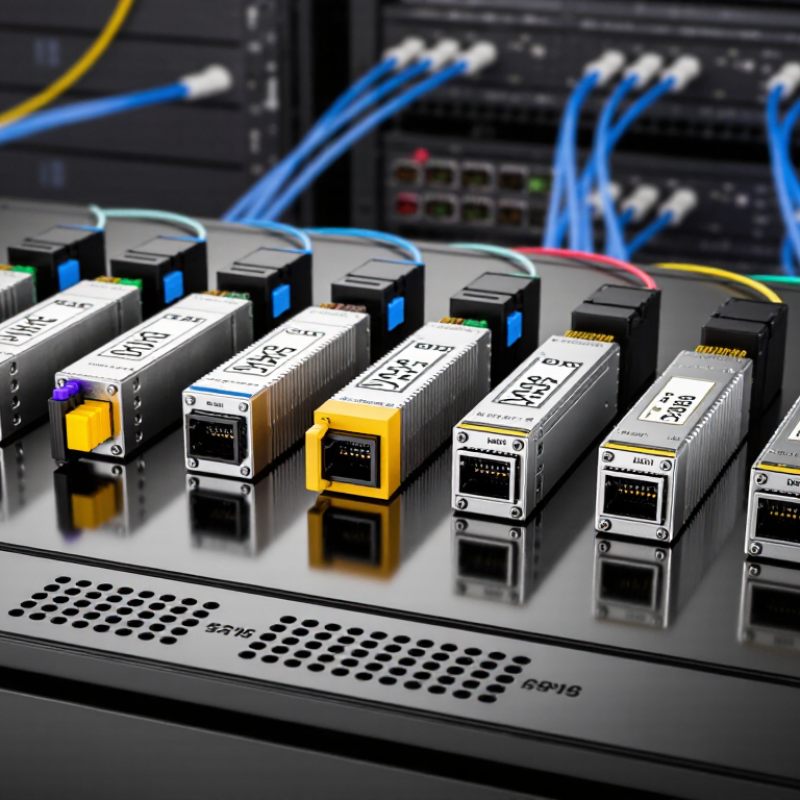
Single-Mode Transceivers: Definition, Standards, and Core Applications
Single-mode transceivers use a narrow optical path for long-distance data transmission. Their cores usually measure about 9 micrometers. They operate with single-mode fiber, commonly aligned with ITU-T G.652 or G.657 specifications.
Typical formats include 1G LX
10G LR
10G ER
25G LR
40G LR4
100G LR4
100G ER4
400G FR4
400G LR4
coherent modules. Each type balances reach, bandwidth, wavelength, and power consumption differently.
Standards matter during global purchasing.
IEEE 802.3 defines many Ethernet interfaces and their optical requirements. Multi-source agreements often describe mechanical dimensions, electrical pins, and monitoring functions. IEC 60825-1 addresses laser safety, while IEC 61300 testing methods support connector and fiber performance checks.
Buyers should verify wavelength, fiber type, transmission distance, and maximum link loss. Digital diagnostics can reveal temperature, voltage, bias current, and received power. Light levels matter.
In field installations, a 10G LR module may suit a campus link near 10 kilometers. A 100G LR4 module can support higher-capacity data center interconnections over single-mode fiber. Coherent transceivers serve longer regional or metropolitan routes, but they require stricter optical planning.
Clean connectors before testing. Small contamination can create unstable readings. Compatibility is not guaranteed by a matching speed label. Host firmware, coding, lane mapping, and power limits still need checking.
Specifications can mislead. I have seen acceptable-looking links fail after temperature changes or excessive connector loss. Careful testing remains more dependable than a quick datasheet comparison.
Top 10 Single-Mode Transceiver Types by Speed, Distance, and Interface
Single-mode transceivers are selected by speed, reach, and interface, not speed alone. The ten common types include 1G LX, 10G LR, 10G ER, 25G LR, 40G LR4, 100G LR4, 100G ER4, 400G DR4, 400G FR4, and 800G 2xFR4. Their typical reaches range from 10 kilometers to 40 kilometers. Duplex LC interfaces remain practical for many 1G, 10G, and 25G links. Parallel-MPO interfaces suit 40G, 100G, and 400G data-center connections. The Ethernet Alliance 2024 Ethernet Roadmap identifies 800G and 1.6T as major scaling directions. This makes electrical lane count increasingly important.
Distance also changes the engineering decision. A 10G LR module often reaches 10 kilometers over duplex single-mode fiber. A 10G ER module can approach 40 kilometers, but dispersion and optical budget require careful checking. For 400G DR4, four parallel lanes usually support around 500 meters. That is useful inside large campuses, not every metropolitan link. LightCounting’s 2024 optical market analysis continued to highlight strong demand for data-center optical upgrades. Yet market forecasts are not installation guarantees. I have seen projects choose 400G for future growth, then struggle with power, cooling, or incompatible host interfaces.
Tips: Confirm the switch port, fiber standard, wavelength, connector, and link budget before ordering. Verify DOM readings after installation. A cheap module can become expensive after troubleshooting. Also check temperature ratings for outdoor cabinets. The best type is rarely the fastest one; it is the one that fits the real distance and interface.
Top 10 Types of Single Mode Transceivers for Global Buyers - Top 10 Single-Mode Transceiver Types by Speed, Distance, and Interface
| No. |
Transceiver Type |
Typical Data Rate |
Optical Standard / MSA |
Single-Mode Reach |
Operating Wavelength |
Host Interface |
Optical Interface |
Typical Application |
| 1 |
1G LX Single-Mode SFP |
1.25 Gb/s |
1000BASE-LX |
Up to 10 km |
1310 nm |
SFP, electrical serial interface |
Duplex LC |
Campus networks, enterprise uplinks, access aggregation |
| 2 |
1G ZX Extended-Reach SFP |
1.25 Gb/s |
1000BASE-ZX-compatible |
Up to 70–80 km1 |
1550 nm |
SFP, electrical serial interface |
Duplex LC |
Long-haul metropolitan and service-provider links |
| 3 |
10G LR SFP+ |
10.3125 Gb/s |
10GBASE-LR |
Up to 10 km |
1310 nm |
SFP+, electrical serial interface |
Duplex LC |
Data-center interconnects and enterprise backbone links |
| 4 |
10G ER SFP+ |
10.3125 Gb/s |
10GBASE-ER |
Up to 40 km |
1550 nm |
SFP+, electrical serial interface |
Duplex LC |
Metro Ethernet, regional backbone, and telecom access |
| 5 |
10G ZR Extended-Reach SFP+ |
10.3125 Gb/s |
10G ZR, industry MSA type |
Up to 80 km2 |
1550 nm |
SFP+, electrical serial interface |
Duplex LC |
Long-distance metro and data-center interconnection |
| 6 |
25G LR SFP28 |
25.78125 Gb/s |
25GBASE-LR |
Up to 10 km |
1310 nm |
SFP28, electrical serial interface |
Duplex LC |
25G server access and high-density data-center uplinks |
| 7 |
40G LR4 QSFP+ |
41.25 Gb/s |
40GBASE-LR4 |
Up to 10 km |
4 CWDM lanes: approximately 1310 nm |
QSFP+, 4-lane electrical interface |
Duplex LC |
Switch-to-switch data-center and campus backbone links |
| 8 |
100G LR4 QSFP28 |
103.125 Gb/s |
100GBASE-LR4 |
Up to 10 km |
4 CWDM lanes: approximately 1310 nm |
QSFP28, 4-lane electrical interface |
Duplex LC |
100G spine-leaf networks and metro data-center links |
| 9 |
100G ER4 QSFP28 |
103.125 Gb/s |
100GBASE-ER4 |
Up to 40 km |
4 LAN-WDM lanes near the 1310 nm band |
QSFP28, 4-lane electrical interface |
Duplex LC |
Regional data-center interconnect and telecom transport |
| 10 |
400G DR4 QSFP-DD |
425 Gb/s |
400GBASE-DR4 |
Up to 500 m |
4 × 1310 nm parallel lanes |
QSFP-DD, 8-lane electrical interface |
MPO-12, 4-fiber-pair single-mode link |
High-density data-center switch and server interconnects |
1 Actual reach depends on optical power budget, fiber attenuation, connector loss, and deployment conditions.
2 Extended-reach 10G ZR specifications are commonly defined by industry MSAs rather than a single IEEE Ethernet clause.
Optical Wavelengths, Fiber Compatibility, and Transmission Performance
Top 10 Types of Single Mode Transceivers for Global Buyers
Optical Wavelengths, Fiber Compatibility, and Transmission Performance
Single mode transceivers differ mainly by wavelength, reach, and optical budget. Common types include 1310 nm short-reach modules, 1550 nm long-reach modules, CWDM units, and DWDM units. Other options use 1490 nm, 1577 nm, or paired BiDi wavelengths. Tunable models can shift across several DWDM channels. Simplex designs also reduce fiber consumption. Each type serves a different network condition.
Wavelength affects attenuation, dispersion, and amplifier requirements. The 1310 nm window usually performs well across short metropolitan links. The 1550 nm window supports longer distances but may require dispersion control. CWDM offers wider channel spacing and simpler deployment. DWDM delivers higher capacity over carefully engineered routes. It is less forgiving. Buyers should check OS2 fiber support, connector polish, bend sensitivity, and fiber standard compatibility. G.652D fiber is common, while G.657 fiber handles tighter cable bends.
Transmission performance
Transmission performance depends on more than advertised distance. Measure link loss, connector count, splice quality, receiver sensitivity, and power margin. A 40-kilometer rating may fail on an aging cable with dirty connectors. I have seen neat specifications hide poor field results. Temperature changes can also affect wavelength stability and error rates. Select modules with suitable monitoring, forward error correction, and operating temperature ratings. Leave practical margin. The perfect calculation rarely survives real installation conditions.
How Global Buyers Compare Compatibility, Reliability, and Total Cost
Top 10 Types of Single Mode Transceivers for Global Buyers
Global buyers often compare ten common single mode transceiver types: 1G, 10G, 25G, 40G, 100G, CWDM, DWDM, BiDi, extended-temperature, and tunable models. Each type solves a different network problem. Speed alone does not confirm compatibility. Buyers should check transmission distance, wavelength, connector type, fiber specification, and host equipment coding. A 10G module may fit physically but still fail during link initialization. That mistake is expensive.
Compatibility testing should happen before large-volume purchasing. Ask for interoperability records, optical power ranges, receiver sensitivity, and digital monitoring details. Check whether the module supports the intended operating temperature. In coastal warehouses, humidity and dust can expose weak optical sealing. In outdoor cabinets, thermal cycling matters more than attractive specifications. Clean connectors matter too. Small particles can create unstable links and confusing fault reports.
Reliability should be judged through burn-in results, temperature testing, and traceable quality records. Total cost includes the purchase price, installation labor, replacement stock, power use, and possible downtime. A cheaper module can become costly after repeated link failures. However, higher-priced equipment is not automatically better. I have seen buyers overpay for features their network never used. Calculate real reach and capacity first. Review warranty terms, local support, and return procedures carefully. A practical comparison sheet can reveal gaps that a product datasheet quietly leaves unanswered.
Top 10 Types of Single-Mode Transceivers for Global Buyers
Nominal maximum transmission distance over single-mode fiber is used as a practical comparison point.
Buyers should also verify port standard, optical wavelength, connector type, fiber specification, DOM support,
interoperability, and warranty terms before purchasing.
Reach values reflect common IEEE-defined application classes where applicable. Extended-reach ZR profiles are commonly specified at approximately 80 km, but the actual distance depends on optical power, fiber loss, dispersion, and system design.
Regional Standards, Supplier Evaluation, and Procurement Considerations
Top 10 Types of Single Mode Transceivers for Global Buyers
Regional Standards, Supplier Evaluation, and Procurement Considerations
Global buyers compare more than transmission distance. They must match transceiver types with regional network standards, equipment ports, and deployment conditions. Common choices include SFP, SFP+, SFP28, QSFP+, QSFP28, BiDi, CWDM, DWDM, and extended-temperature models. IEEE specifications and multi-source agreements help confirm electrical and optical compatibility. Local telecom requirements may also affect wavelength plans, labeling, safety documentation, and import records.
A serious supplier review starts with technical evidence. Request test reports for optical power, receiver sensitivity, wavelength accuracy, and bit error performance. Check whether samples work with your actual switches, not only with a laboratory tester. Review production traceability, firmware control, warranty terms, and failure-analysis procedures. A clean datasheet is useful. It is not proof of consistent production. Small details matter, such as connector polish, DOM readings, and packaging against moisture.
Procurement teams should compare total operating cost, not unit price alone. Ask about minimum order quantities, sample fees, lead times, spare ratios, and replacement handling. Confirm whether the supplier can support different regions without mixing incompatible versions. A cheaper module may create expensive delays during commissioning. Forecasts can also be wrong. Keeping a modest safety stock may protect a project, but excessive inventory can leave older wavelengths unused. One practical improvement is a staged order: qualify samples, approve a pilot batch, then release larger volumes after field checks.
FAQS
It sends data over narrow-core fiber across long distances.
Match speed, distance, interface, wavelength, fiber type, and link loss.
A 10G long-reach module often fits this distance.
It can support roughly 500 meters over single-mode fiber.
Duplex LC connectors suit many 1G, 10G, and 25G links.
Host firmware, lane mapping, coding, pin assignments, and power limits also matter.
Request optical power, receiver sensitivity, wavelength accuracy, and bit-error results.
Clean connectors before testing and inspect them under suitable equipment.
Compare unit price, lead time, minimum quantity, spares, warranty, and replacement handling.
A modest safety stock can protect commissioning and urgent repairs.
Conclusion
This guide explains what a single mode transceiver is, how it supports long-distance data transmission, and which industry standards shape its design and deployment. It introduces the top ten types categorized by data rate, transmission distance, connector interface, and network role, helping readers understand the differences between common options for access, enterprise, data center, and telecommunications environments. It also examines optical wavelengths, fiber compatibility, link budgets, power consumption, and performance factors that influence network stability.
For global buyers, the selection process should go beyond purchase price. Compatibility with existing equipment, interoperability, temperature range, diagnostic functions, reliability, warranty coverage, and total cost of ownership are essential considerations. Regional regulations, certification requirements, logistics conditions, supplier quality systems, testing procedures, and technical support should also be evaluated before procurement. By comparing these factors systematically, buyers can choose a suitable single mode transceiver that delivers dependable performance, efficient maintenance, and long-term value across different markets and network applications.

 Novafiber